
The Ferrari 296 marks a major shift in Ferrari’s engine philosophy. Instead of a naturally aspirated V8, it uses a twin-turbo V6 combined with a hybrid system. As a result, the sound experience is very different. In this guide, we explain exactly why the Ferrari 296 sounds the way it does.
The Ferrari 296 V6 hybrid powertrain
The Ferrari 296 uses a 3.0-liter twin-turbo V6 paired with an electric motor. This setup delivers impressive performance and efficiency. However, it also changes how sound is produced. Combustion, turbochargers and electric assistance all play a role.
Compared to older Ferrari engines, the exhaust pulses are different. The firing order of a V6 creates a sharper rhythm. Turbos then smooth and quiet the raw sound. Finally, electric driving reduces engine noise at low speeds.

Why does the Ferrari 296 sound different?
First, cylinder count matters. A V6 naturally sounds tighter and higher-pitched than a V8. Second, turbochargers act as silencers. They absorb energy that would otherwise become sound.
Third, the hybrid system allows silent driving in certain situations. That means less engine presence in traffic. As a result, the overall sound experience feels more controlled. Some drivers love this refinement, while others want more emotion.
Ferrari 296 stock exhaust sound
From the factory, the Ferrari 296 exhaust is well engineered. It sounds clean and modern. At higher RPM, the engine becomes sharper and more aggressive. Still, volume is kept within strict regulations.
At low speeds, the car can feel surprisingly quiet. This is partly due to hybrid operation. It is also a conscious choice by Ferrari. Comfort and global compliance were priorities.

How aftermarket exhaust systems change the sound
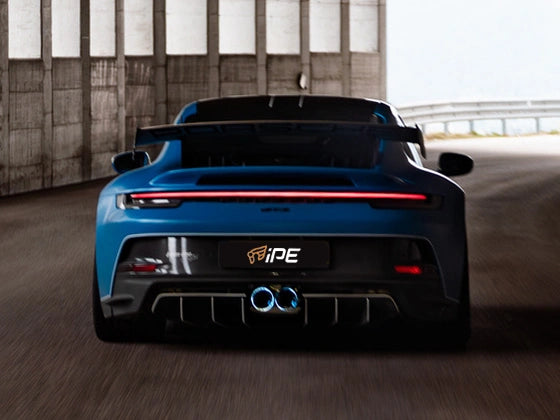
Aftermarket exhaust systems focus on restoring emotion. They improve flow and reduce sound restriction. As a result, the V6 character becomes more expressive.
Different systems emphasize different qualities:
- More volume and sharper high-RPM sound
- Deeper tone and stronger presence
- Better balance between daily driving and excitement
Importantly, valves allow drivers to control sound levels. This keeps the car usable in everyday conditions. Yet, when opened, the Ferrari 296 finally feels alive.
👉 For a brand-by-brand breakdown, see our dedicated comparison: Ferrari 296 exhaust comparison: IPE vs Akrapovič vs Novitec .
What to expect as a Ferrari 296 owner
The Ferrari 296 will never sound like an old NA V8. That era is over. However, it offers a new type of sound experience.
With the right exhaust setup, you can:
- Increase emotional engagement
- Enhance high-RPM character
- Maintain comfort when valves are closed
In short, the sound can be tailored to your taste. That flexibility is one of the 296’s strengths.
FAQ
Is the Ferrari 296 quieter because it’s a hybrid?
Partly, yes. Electric driving reduces engine use at low speeds. Turbochargers also reduce raw exhaust noise.
Can an exhaust make the Ferrari 296 sound like a V8?
No. The engine architecture is fundamentally different. However, an aftermarket exhaust can add volume, clarity and emotion.
Does changing the exhaust affect drivability?
When properly designed, drivability remains excellent. Valved systems help balance comfort and sound.
Why BaanVelgen
At BaanVelgen, we focus on the full experience. Not just sound, but balance. We help you choose the right exhaust based on how you drive.
Want advice for your Ferrari 296?
Contact BaanVelgen for tailored exhaust guidance.
Precision. Performance. Perfection.