
Electric model identity updated 8 November 2026. The future of the BMW M3 is developing in more than one direction. The BMW M3 G80 remains the current and fully established combustion-engine model. A possible successor is commonly associated with the G84 development code, while BMW has separately confirmed the fully electric BMW M3 using Neue Klasse technology.
These three names are frequently combined in online discussions, but their official status is very different. The G80 is a production vehicle, the G84 remains expected rather than confirmed, and the fully electric BMW M3 is officially confirmed. BMW also uses ZA0 as a prototype designation; this alone does not establish the final production code.
This comparison separates what BMW has confirmed from what is expected and what remains unknown.
G80, Expected G84 and M Neue Klasse at a Glance
| Platform | Official status | Drivetrain | Fitment status | Primary upgrades |
|---|---|---|---|---|
| BMW M3 G80 | Current production model | Six-cylinder combustion engine | Established and verified | Wheels, exhaust, intake, suspension and aerodynamics |
| Future M3 — Expected G84 | Not officially announced | Commonly expected to retain combustion power | No verified vehicle-specific fitment | Potential future wheels, exhaust, suspension, intake and aerodynamics |
| Electric BMW M3 — Neue Klasse | Electric M3 model name officially confirmed; ZA0 used for prototype | Four-motor fully electric architecture | No verified production fitment | Future wheels, chassis, brakes, aerodynamics and weight optimisation |
BMW M3 G80: The Current and Established Choice
The BMW M3 G80 is the only one of these three platforms that can currently be treated as a complete production model with established technical data and verified aftermarket fitment.
Its six-cylinder S58 engine, available rear-wheel-drive and M xDrive configurations, known suspension architecture and documented wheel measurements make it possible to select upgrades with confidence.
BMW has also confirmed that the existing M3 and M4 will receive M Ignite combustion technology from July 2026. The new ignition technology is intended to improve efficiency under high loads and help the six-cylinder engines meet Euro 7 requirements. This confirmation applies to the existing model range and is not an announcement of a separate G84 generation.
Established G80 upgrade categories
- Forged wheels: verified configurations are available from BC Forged, BBS, Brixton Forged and other manufacturers.
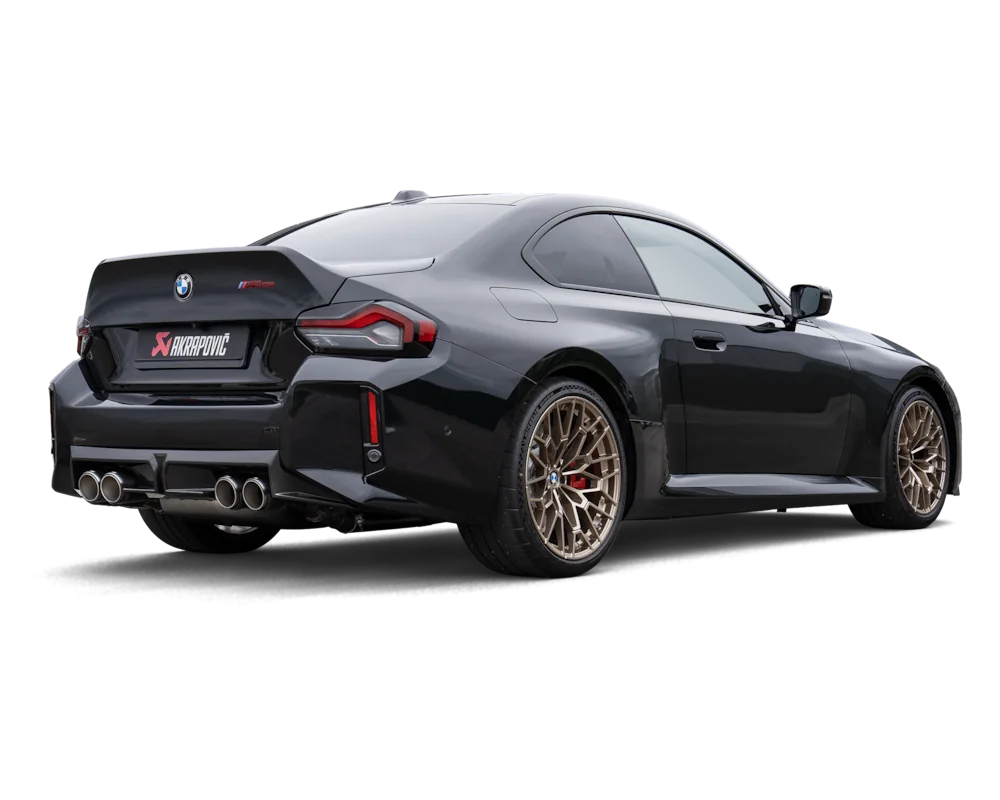
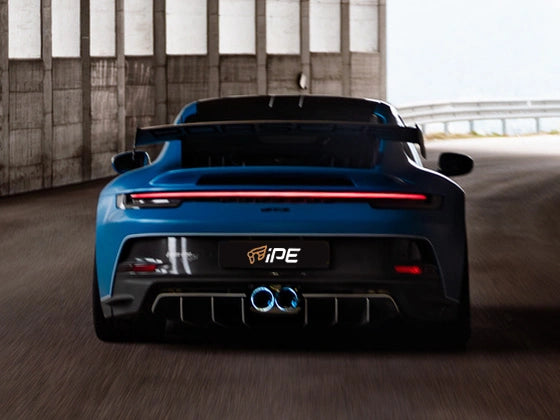
- Exhaust systems: established systems are available from iPE, Akrapovič and other exhaust manufacturers.
- Intake systems: vehicle-specific intake solutions are already available.
- Suspension: tested springs, height-adjustable systems and coilovers can be selected around the required use.
- Carbon aerodynamics: established front, side and rear components are available from multiple manufacturers.
For someone who wants to buy, modify and drive an M3 today, the G80 remains the only fully established option in this comparison.

Future BMW M3: What Does Expected G84 Mean?
G84 is commonly used as the expected development code for a possible future combustion-engine BMW M3. However, BMW has not formally confirmed G84 as a production code, announced the final model or published its technical specification.
It is therefore premature to present a launch date, engine configuration, power output, dimensions or wheel fitment as fact. Even the relationship between a possible future combustion M3 and BMW’s electric Neue Klasse models has not been explained in a complete official product strategy.
The future BMW M3 collection currently serves as a pre-launch development page. The forged wheel designs shown there are made to order, but no final G84-specific wheel configuration should enter production until reliable vehicle data is available.
For wheel design choices, exhaust priorities and a complete setup brief, read our Future BMW M3 (Expected G84): Wheels & Upgrade Guide.
Potential G84 upgrade categories
- Made-to-order forged wheels after axle-load, brake-clearance and mounting data become available
- Exhaust systems after the engine, emissions equipment and exhaust architecture are confirmed
- Intake systems designed around the final engine-bay layout
- Suspension products developed for the production chassis and electronic systems
- Carbon components based on the final production bodywork
These categories are technically plausible for a future combustion M3, but no brand-specific G84 product should currently be treated as confirmed.
Electric BMW M3: The Confirmed Neue Klasse Direction
BMW has officially confirmed the fully electric BMW M3. BMW M states that production in Munich is planned from 2027. This establishes the model name and planned production year, not a specific customer delivery date in every market.
The company has disclosed significantly more technical information about the electric architecture than it has about the expected G84:
- Four electric motors, with one motor driving each wheel
- BMW M Dynamic Performance Control
- Wheel-specific drivetrain and braking control
- A front axle that can be completely decoupled
- 800-volt electrical architecture
- More than 100 kWh of usable battery capacity
- Performance-optimised Gen6 cylindrical battery cells
- A battery housing integrated as a structural chassis component
BMW has also presented the BMW M Concept Neue Klasse as a design and technology preview. The concept itself is not intended for sale, but BMW states that elements of its design, materials and driving experience will reach future BMW M production models.
BMW identifies the electric model as the BMW M3 in its 2 October 2026 announcement. BMW M also explicitly uses “ZA0 prototype” in M Electrified, Episode 5. The M3 name is therefore confirmed; ZA0 is an officially used prototype reference, while its status as the final production code remains separate. Our electric BMW M development guide covers the wider technology and upgrade-planning context.

How the Driving Concepts Differ
G80: familiar M character
The G80 follows the established BMW M formula: a high-performance six-cylinder engine, mechanical engine sound, selectable drivetrain configurations and a mature chassis with extensive development knowledge already available.
Expected G84: possible evolution of the combustion M3
If BMW confirms a new combustion M3 under the G84 designation, it may provide a route for customers who want a more traditional drivetrain alongside BMW M’s electric programme. Until BMW publishes the production strategy, however, its positioning remains uncertain.
M Neue Klasse: wheel-specific electric performance
The electric architecture approaches vehicle dynamics differently. Four independent motors allow torque, traction, braking and recuperation to be controlled at individual-wheel level. This creates opportunities that do not exist within a conventional combustion drivetrain.
The front axle can also be decoupled, allowing rear-wheel-drive characteristics and improved efficiency in suitable driving conditions.
How the Aftermarket Will Differ
The G80 has an established engine-focused and chassis-focused aftermarket. A future combustion G84 could eventually develop along a similar route, depending on its final technology.
The fully electric BMW M3 using Neue Klasse technology will shift attention away from conventional combustion-engine exhaust and intake upgrades. Its most relevant future categories are more likely to include:
- Vehicle-specific lightweight forged wheels
- Tyres selected around load, grip, efficiency and thermal demands
- Suspension and chassis development
- Brake and cooling solutions
- Aerodynamic components
- Weight optimisation
- OEM+ visual personalisation
A forged wheel is not automatically an improvement simply because it is forged. The complete diameter, width, offset, tyre, load rating and wheel mass must be evaluated together.
Made-to-order manufacturers such as BC Forged and Brixton Forged provide useful flexibility once verified production data becomes available.

Which BMW M3 Direction Is Most Relevant to You?
Choose the G80 if you want an established car now
The G80 is the logical choice for customers who want a known combustion drivetrain, engine sound and an established selection of proven aftermarket products.
Watch the expected G84 if you want a future combustion model
The expected G84 is relevant to buyers who may want the next development of the traditional M3 formula. The principal limitation is that BMW has not yet officially confirmed the model or its technical specification.
Watch BMW M Neue Klasse if you want the new electric architecture
The Neue Klasse M programme is the most technically different direction. Its four-motor architecture and centralised driving-dynamics control could fundamentally change how a BMW M deploys power, braking and recuperation.
Confirmed, Expected and Unknown
Officially confirmed
- The BMW M3 G80 remains an established production model.
- The existing M3 and M4 receive M Ignite technology from July 2026.
- The fully electric BMW M3 is officially named, with production in Munich planned from 2027.
- BMW M uses ZA0 as a prototype designation.
- BMW M has confirmed four motors, 800-volt technology and more than 100 kWh of usable battery capacity.
Expected but not officially confirmed
- A future combustion-engine BMW M3 associated with the G84 code
- Use of ZA0 as the final public production code
Still unknown
- Final G84 production identity and drivetrain specification
- Power, acceleration, range, weight and pricing
- Wheel sizes, offsets, brake clearance and load requirements
- Confirmed aftermarket release schedules
Frequently Asked Questions
Is the BMW M3 G84 officially confirmed?
No. G84 is commonly associated with a possible future combustion-engine M3, but BMW has not formally announced the production model or code.
Is the BMW M Neue Klasse officially confirmed?
Yes. BMW has confirmed the fully electric M3 using Neue Klasse technology and states that production in Munich is planned from 2027.
Are the electric BMW M3 name and ZA0 code confirmed?
BMW has officially confirmed the fully electric BMW M3 name. BMW M also uses ZA0 for its prototype, but this does not by itself confirm ZA0 as the final production code.
Will the expected G84 replace the G80?
BMW has not yet published a complete future product strategy confirming the G84 or explaining exactly how it would replace the G80.
Will the electric model replace the combustion M3?
BMW has not confirmed that the electric Neue Klasse model will completely replace the combustion M3. The existing M3 and M4 continue with updated M Ignite engine technology from July 2026.
Which platform already has confirmed aftermarket parts?
Only the G80 has a mature selection of verified wheels, exhaust systems, intakes, suspension and aerodynamic components. Future G84 and Neue Klasse products require production data and manufacturer confirmation.
Can made-to-order wheels already be selected for G84 or M Neue Klasse?
Customers can already identify a preferred design, but the final vehicle-specific configuration should not enter production until the required dimensions, load ratings, mounting data and brake clearance have been verified.
Official Sources
- BMW Group: electric BMW M3 model confirmation, 2 October 2026
- BMW M: electric M3 production in Munich from 2027
- BMW M: ZA0 prototype designation
- BMW Group: Fully electric BMW M models and Neue Klasse technology
- BMW M: BMW M Concept Neue Klasse
- BMW Group: M Ignite technology for the BMW M3 and M4
Explore the platforms: View the current BMW M3 G80 upgrades, the expected future G84 collection or the BMW M Neue Klasse made-to-order wheel collection.